A guide for existing bee exemptions
What records should you keep for a Texas bee exemption?
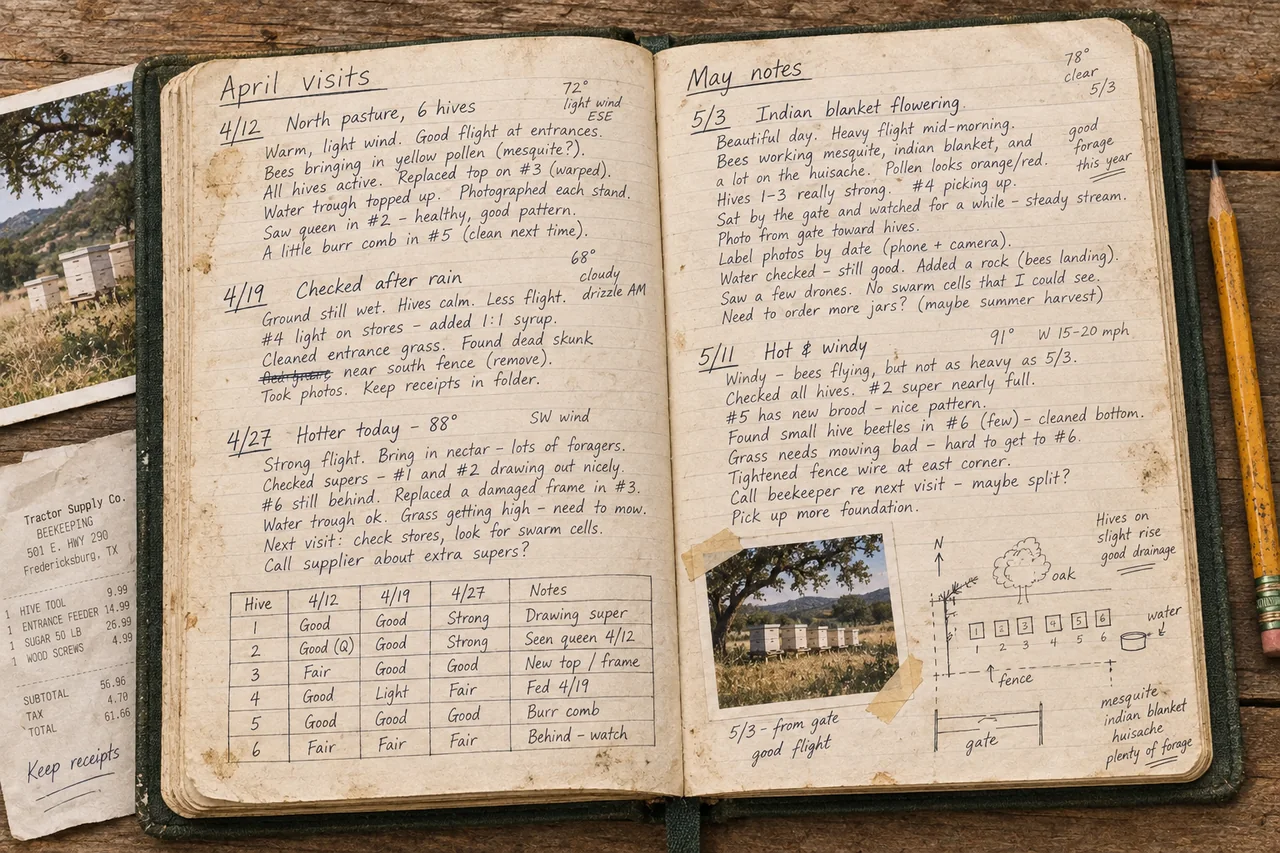
Keep dated records of your active colonies, inspections, hive locations, purchases, and beekeeping work. Add photographs, a property map, and your beekeeper's service agreement if someone else manages the hives. Together, those records show what happened on the land throughout the year.
What people call a bee exemption is usually agricultural appraisal of qualifying land. The paperwork supports the beekeeping taking place there. It does not replace the work.
Start with the property and its approved acreage
Create one folder for each property and year. Put the CAD account number, the acreage receiving bee valuation, and your most recent relevant district correspondence at the front. Keep a map showing the property boundary and the apiary's location.
A useful map also identifies water and forage where those details matter to the local requirements. Blanco's 2026 guidelines, for example, call for hive locations and vegetation information. A new hive location should be easy to identify without comparing several unlabelled photographs.10
Track active colonies over time
A hive count should describe living colonies, not the number of stacked boxes. Record the date, the number of active colonies, and any changes since the previous visit.
If a colony dies, splits, is replaced, or leaves the property, write down what happened. Keep the replacement receipt or service note with the entry. A single year-end photo cannot explain a change that happened six months earlier.
For example, an entry might read: “March 14: inspected six active colonies. Replaced the queen in hive 3. Added the receipt and two inspection photos.” This is an illustrative record, not a customer's result or a county-required format.
Keep notes that explain the work
Useful inspection notes can cover colony condition, queen or brood observations, feeding, pest management, water, and equipment repairs. Record what you actually observed and did. A short, dated note is more useful than a long description written from memory at the end of the year.
Some districts are specific about frequency. Real's published bee standards call for checks at least monthly and good records of management. Bandera asks for quarterly inspection logs with its annual update.367
You do not need to turn every visit into an essay. Make the record legible, identify the property and date, and save the evidence that belongs with it.
Save receipts and production records together
Keep receipts for bees, queens, feed, equipment, and paid hive services. Record harvests and other products when they occur, including what was used or sold. Do not invent a harvest to fill a blank space.
Texas law recognizes pollination as well as the production of food or other tangible products with commercial value. The purpose of the operation and the district's requested evidence should guide the records you keep.1
If you hire a beekeeper, agree on the records
Ask for dated service notes that identify your property, the active colony count, and the work completed. Keep the service agreement or lease with those notes. When colonies move, record the departure and return dates.
This matters because the landowner and beekeeper may each hold part of the evidence. The beekeeper may have the inspection log while the owner has the district letter and parcel map. Put them together before a report is due.
Build a packet someone can follow
A practical order is property details, the requested form, a short activity summary, inspection records, photos, receipts, and the lease or service agreement. Label photos with dates and subjects. Use the district's requested file format and delivery method.
Travis's notice for the survey due February 1, 2027 calls for the completed survey and supporting records as a PDF packet when sent by email. It does not accept a collection of third-party storage links as the submission.5
A recordkeeping checklist
- CAD account number and qualifying acreage
- District letters and the relevant form
- Hive location map
- Dated active-colony counts
- Inspection and management notes
- Photos with dates and descriptions
- Bee, queen, feed, and service receipts
- Production or pollination records
- Beekeeper agreement and movement records, where applicable
- A copy of anything submitted and the delivery confirmation
Keep original records when you prepare a report. The packet should make those records easier to follow, not overwrite them.
